
Visit Jelenia Gora, Poland – a Perfect Base to Explore Lower Silesia
Last Updated on 26/04/2024 by kami
Jelenia Gora (and the whole region of Lower Silesia in Poland) was my best discovery and the highlight of my 2020 travels. Although traveling was rather limited in that year I still don’t think any place abroad would beat this area in my personal ranking.
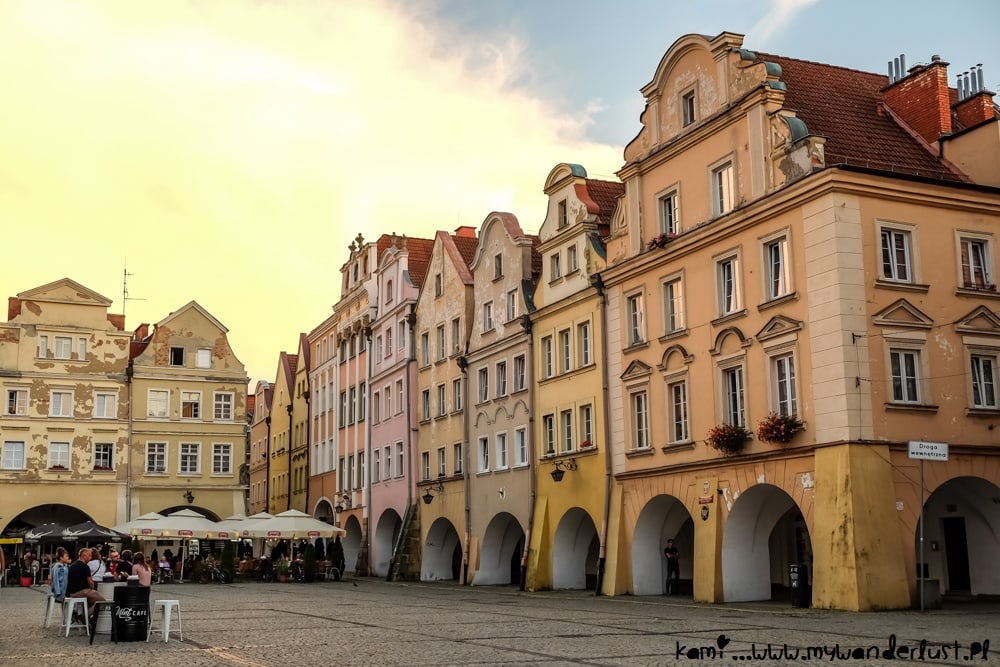
I had a chance to visit Jelenia Gora a few times before, ages ago when I was frequently going to the nearby mountains or to places in the Czech Republic just across the border, but I never really seen the city properly, I always only stormed through the center on the way from the bus to the train station.
But I remembered some of the Jelenie Gora attractions (especially the beautiful arcades of townhouses and the tram standing in the main square) so when I was somehow forced to travel in Poland I’ve thought about visiting this part of the country right away.
I used Jelenia Gora as a base to explore the area and it was a perfect choice – there are so many amazing places to visit nearby and the public transport connections around were pretty fine.
But I also realized how interesting the city itself is, not to mention all the great things to do in Jelenia Gora. I enjoyed the place so much I even extended my stay there for two extra days!

Jelenia Góra also had a bit of an emotional touch for me. In the turbulent times right after World War 2, part of my family (including my grandfather) came to settle in this area, in the town next to Jelenia Góra. Eventually, after a while, they returned to central Poland but my trip to Jelenia Gora was a good reminder of all the family stories from that area I’ve heard before. It was so easy for me to imagine that this place could have been more than just a holiday destination for me (I actually wouldn’t mind that) – maybe that was partly a reason why I loved this area so much?
But nevertheless, Jelenia Gora is a wonderful place to visit and so today I’m going to tell you all about this city so you can plan your Jelenia Gora sightseeing too.

Where is Jelenia Gora, Poland
Jelenia Gora, the city of almost 80 thousand inhabitants, is located in the very south-west of Poland, not far from the border with the Czech Republic and Germany. The nearest bigger Polish city is Wroclaw which is around 110 km away from Jelenia Gora.
Why visit Jelenia Gora
Jelenia Gora is one of the oldest cities in Poland, the first settlements were here already in the 10th century and the town got its rights in 1288, under Polish rule. Between the mid-18th century and the end of WW2, the city was part of Prussia, and many of today’s attractions date back to that period. Over the centuries, Jelenia Gora was a wealthy town on the trade routes and you can easily see the former glory still today.
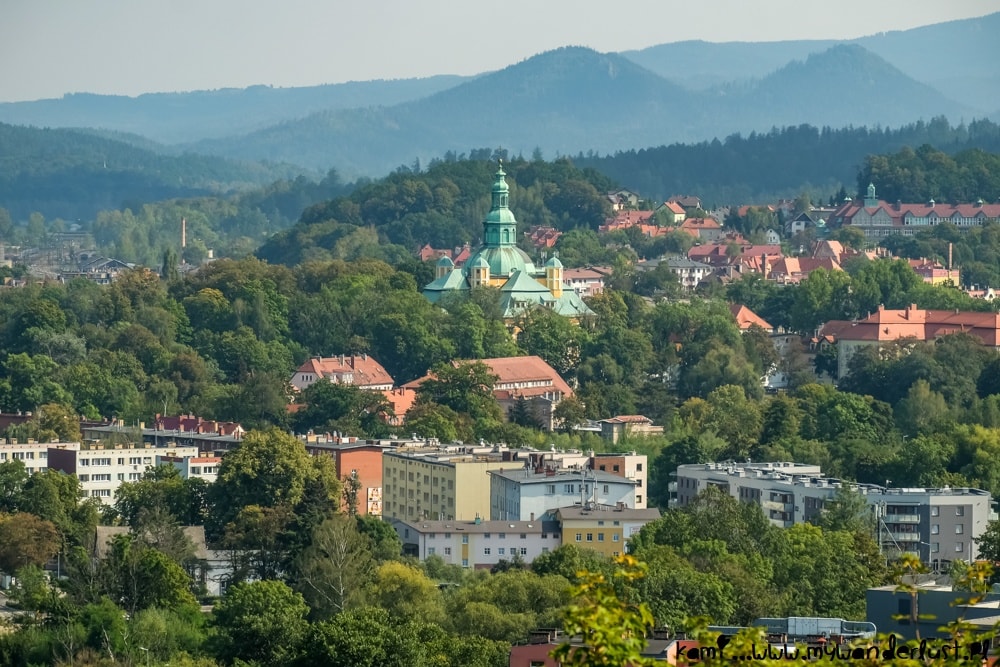
The city really has a lot to offer and the beautiful center can easily enchant. Jelenia Gora has one of the prettiest locations in Poland, the city is nestled in the basin, surrounded by mountains from each side.
With so many attractions near the city, Jelenia Góra can be also a great base to explore this part of Lower Silesia – the region that I think is the most interesting one in Poland.
Oh, and the name of the city literally means “Deer Mountain” hence you can see many cute deers all over the place (mostly sculptures but still, that’s nice).
How to get to Jelenia Gora
Getting to Jelenia Gora is actually fairly easy as there are frequent train connections from Wroclaw (where you can easily get from just about every place in Poland).
If you are going from Germany there are direct trains from Goerlitz and if you are going from the Czech Republic you can take the train from Liberec to Szklarska Poręba and then change for a train or bus to Jelenia Gora.
How much time for visiting Jelenia Gora
You can spend only an hour or two in the city, storm through the center and quickly see its main attractions and still be content about visiting the city.
Or, like me, you can stay in Jelenia Gora for a few days and cherish the place. With every walk around you will still discover new things and details that make this city so interesting. Jelenia Gora is one of those pleasant cities that are perfect for taking it easy and just enjoying it.
Where to stay in Jelenia Gora
During my trip to Jelenia Gora, I stayed in the apartment on the main street – 1 Maja. It was really good, with everything I needed, and the location halfway between the train station and the main square was simply perfect. You can book the place here.
Here are other recommended places to stay in Jelenia Gora, with good location and high rates:
How to get around the city
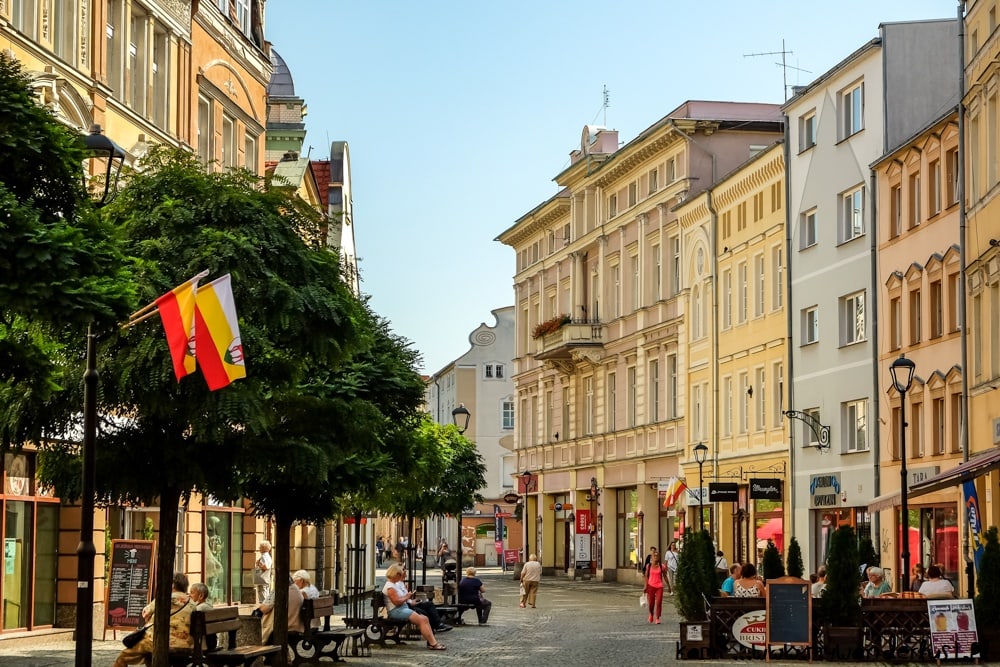
Most of the attractions are located in the center and you can easily walk between them. If you would like to go to places a bit further away (like Cieplice Slaskie Zdroj) there are city buses you can use.
What to see in Jelenia Gora
Being founded in the 11th century, Jelenia Gora has a long and interesting history. It used to be a wealthy place, an important stop on the trade route – the city specialized in the cloth trade. For a few centuries, Jelenia Gora belonged to Prussia under the name Hirschberg im Riesengebirge.
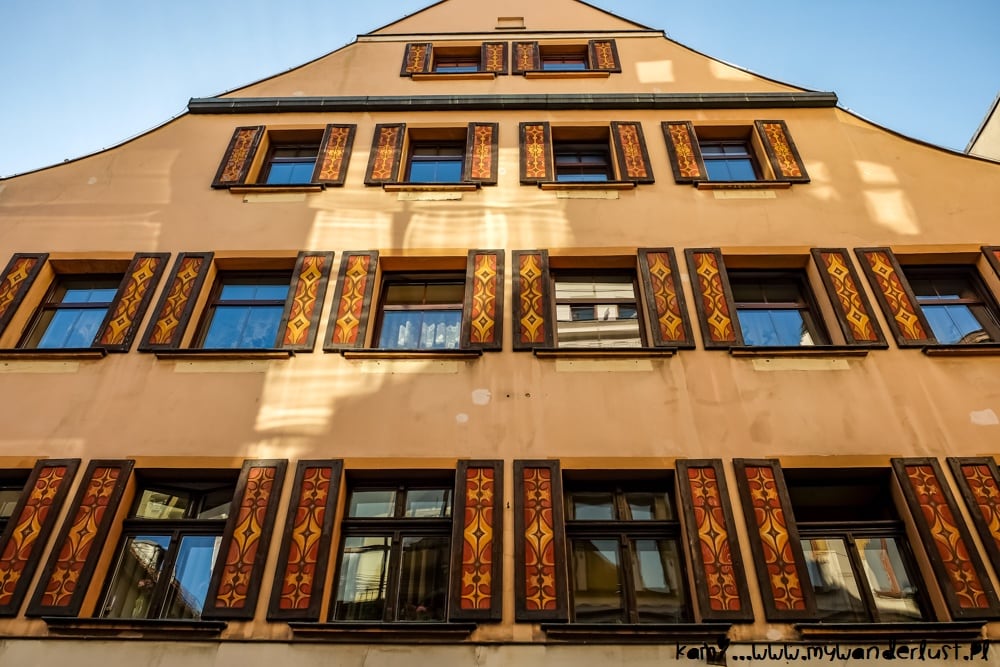
Today you can see remnants of those old days all over the city, the wealthy old houses, the fancy buildings from the turn of the 19th and 20th century and the multicultural influences are all there.
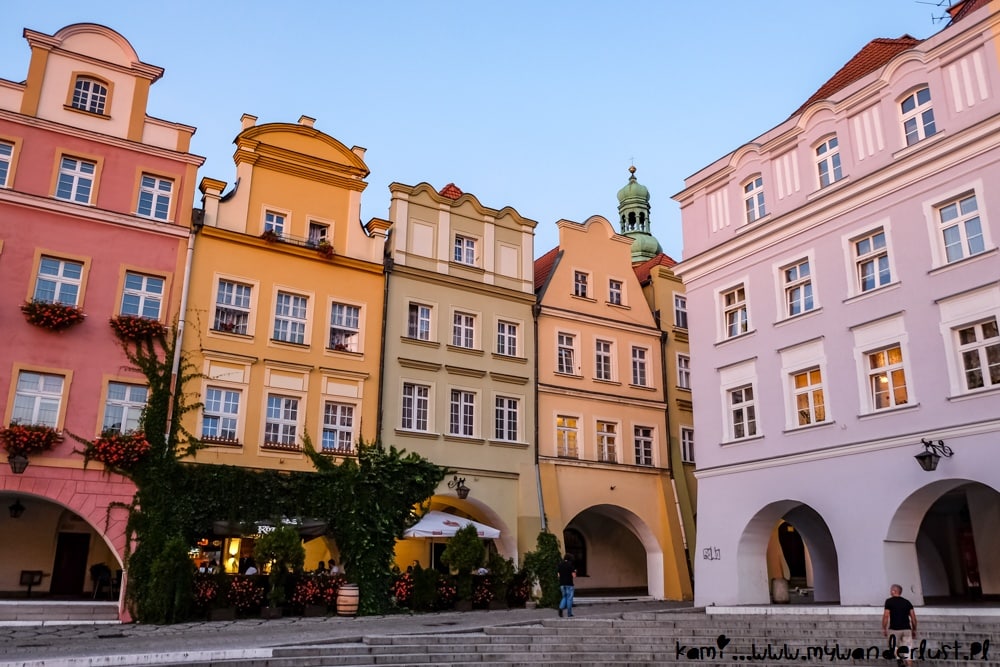
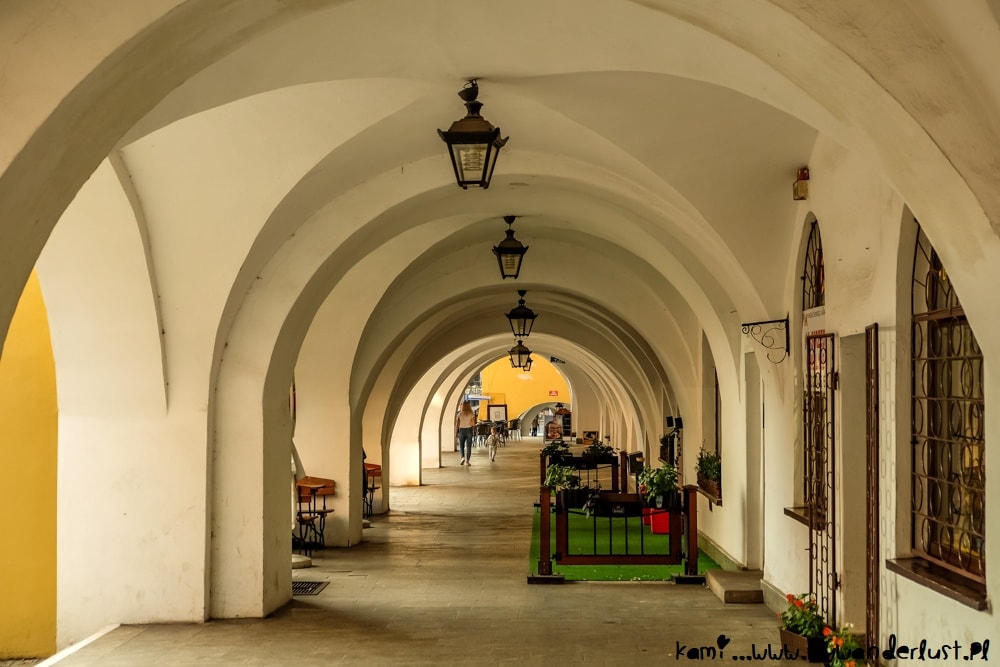
The center of the city is Market Square with the 18th-century town hall and attached “Seven Houses” right in the middle. This is where you will most likely spend a lot of time during your visit to Jelenia Gora. Not only the place is really pretty with colorful townhouses, each with the picturesque arcades (some of the houses need a renovation really badly, though) but that’s also where you will find plenty of fine restaurants and cafes, making the place vibrant until evening hours (unlike other areas in the city).
Next to the town hall, you can stop at the vintage red tram – it’s a reminder of the old times when the tram connected the center with the spa area Cieplice, today you can buy local souvenirs there. If you are looking for more info about the city and surroundings there is also a tourist information point on the square, near the pink deer statue.
If you are observant enough, you will find at least two more cute deers on the square, at least that’s how many I’ve spotted.
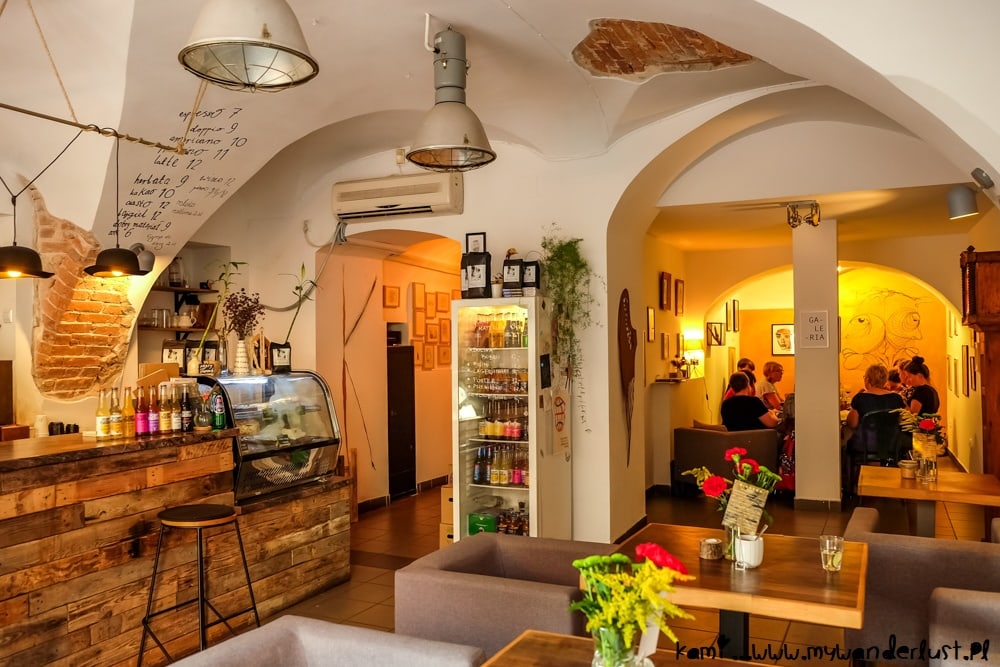
Every day I was at least a few times at Market Square, and I simply loved it. I started days in the cafe, observing the city to wake up to life, I walked across it once or twice during the day and then I ended up there one more time in the evening to get some food and enjoy the vibrant atmosphere.






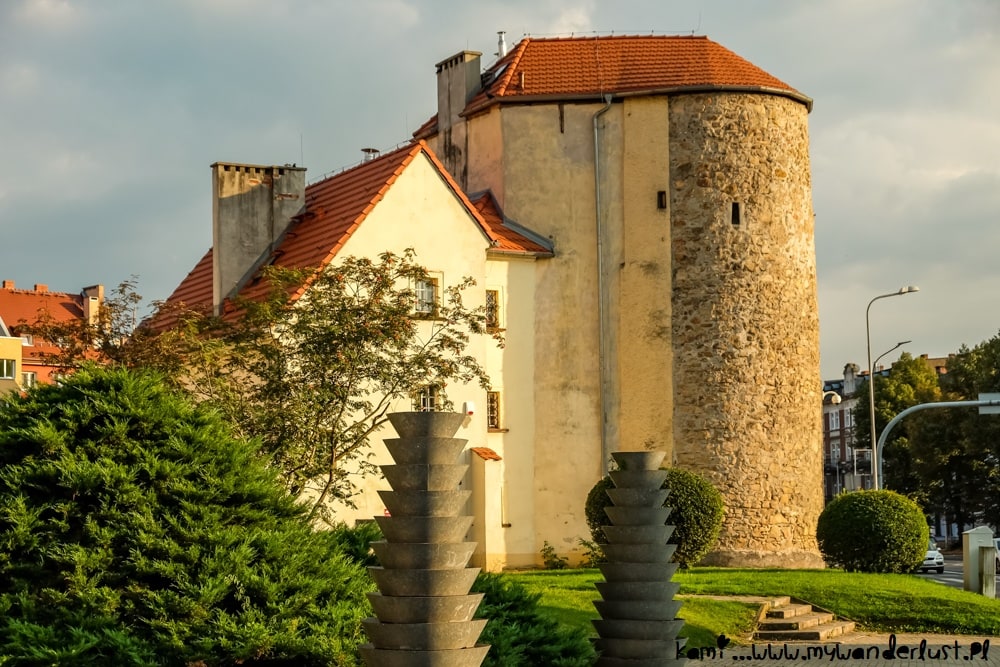
Near Market Square, you can see remnants of the medieval defense walls. In the past, the center was surrounded by massive walls with 3 gates and 36 towers. Today only a small part of it remained but it still can give you an impression of the golden past of the city.
You can also climb to one of the towers – Baszta Zamkowa. I didn’t do it and I really regret it (but at least I have a reason to visit Jelenia Gora again) – I simply didn’t realize it is possible and I was too focused on another viewpoint a bit away from the center (that I visited twice, more on that later). So don’t repeat my mistake, go to Baszta Zamkowa as the view from there must be really good.
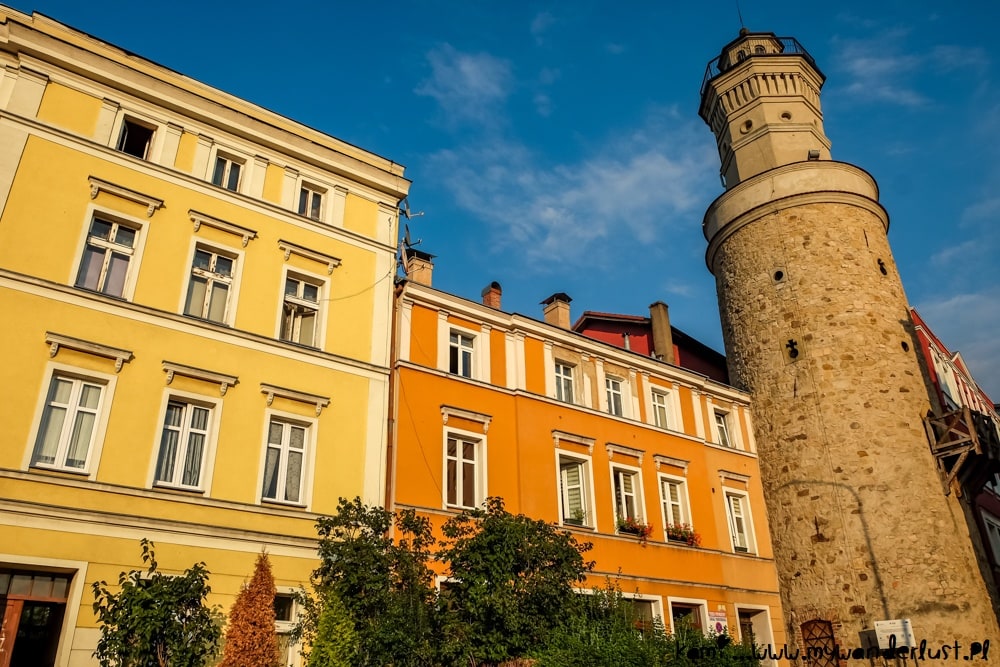
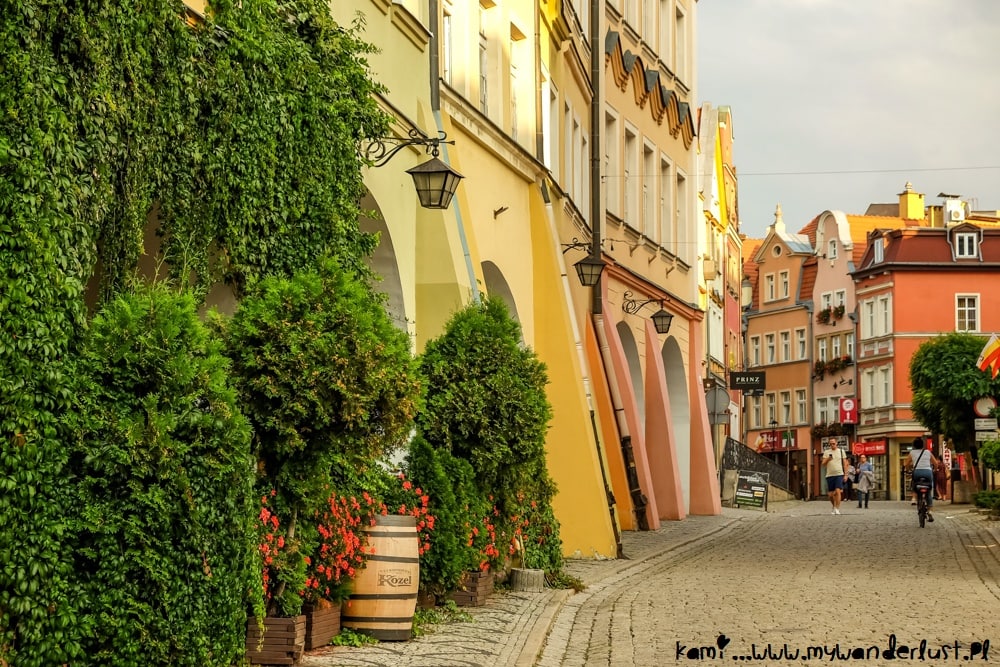
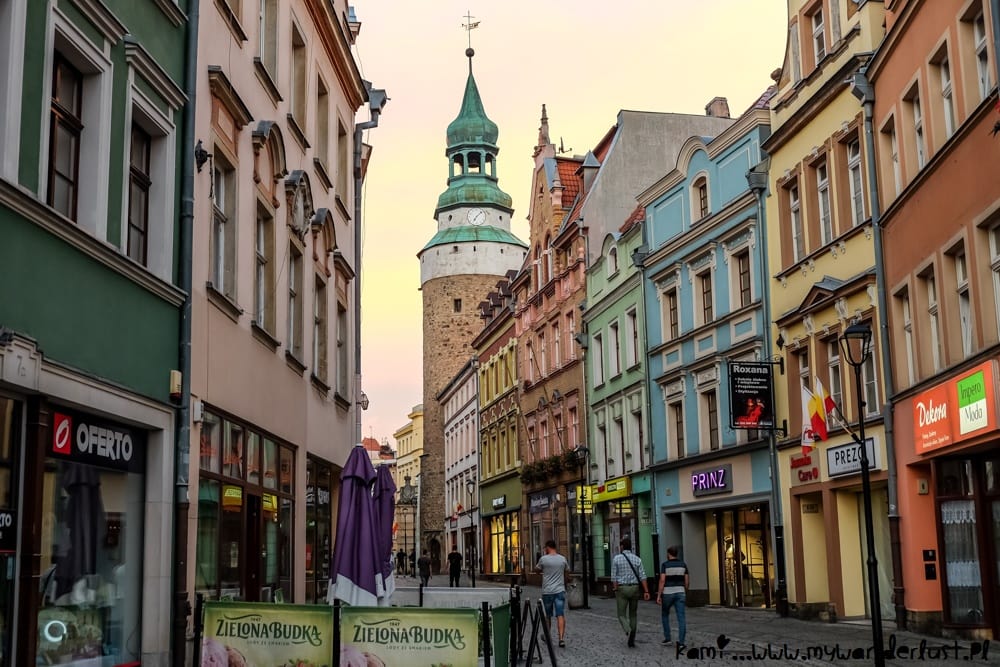
The main pedestrian streets going from Main Square towards the Feast of the Holy Cross Church are Konopnickiej that changes into 1 Maja Street. They are both lined with even more beautiful townhouses and walking it up and down is a real pleasure.
Along the way, you should stop at Wojanowska Gate and Tower, another part of the city walls that remained until today, with the 16th century St. Anne’s Chapel attached.


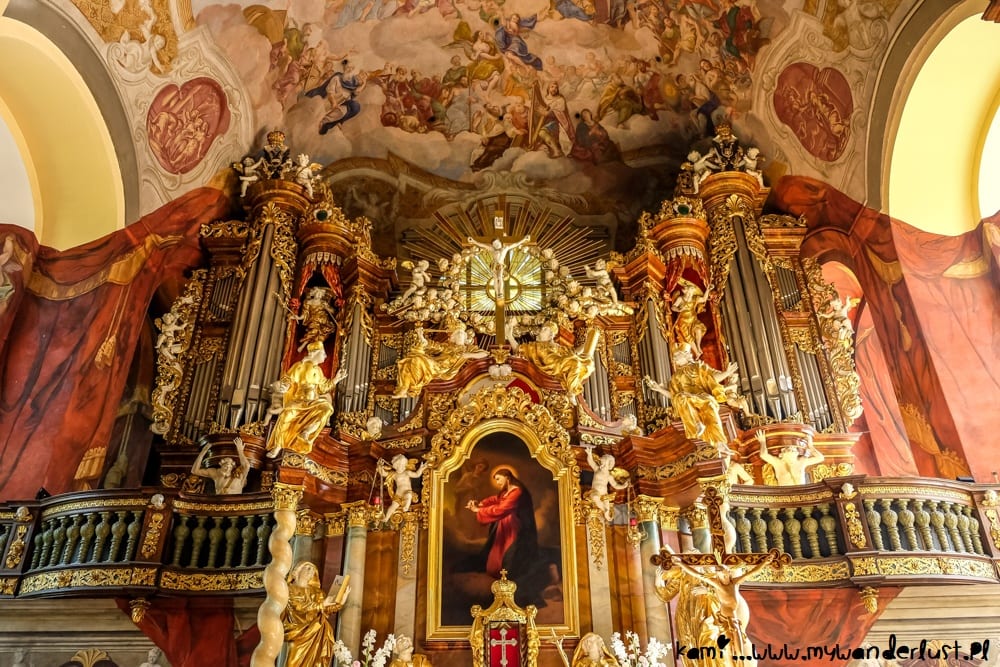
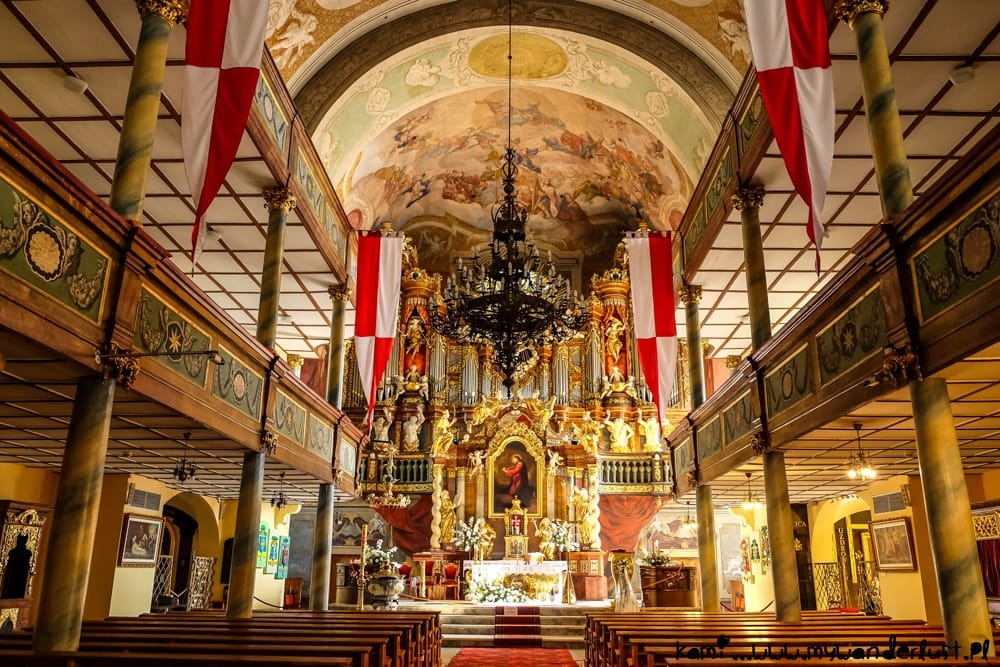
The real highlight of Jelenia Góra and the place that literally took my breath away is the Feast of the Holy Cross Church, hidden in the park on the side of 1 Maja Street. This Baroque masterpiece was built in the 18th century and was one of the six Lutheran “churches of grace” that were built in the current territory of Poland after the agreement following the end of the Thirty Years’ War (today only one of those churches, in Cieszyn, remained Protestant).
The Feast of the Holy Cross Church, built on the shape of the Greek cross, looks impressive already from the inside but once you step inside your jaw will drop. The rich decorations are simply stunning and, since they were mostly funded by local merchants, they are the best proof of how wealthy Jelenia Gora used to be. Apparently, this is the only church in the world where on the altar you can see not only religious figures but also secular elements portraying Jelenia Gora and the Silesia region.
Once you are done with visiting the church be sure to walk around in the surrounding park too as you can find some incredible old German chapels there, some of them have really interesting details (like the chilled skeleton clearly enjoying the afterlife experience).


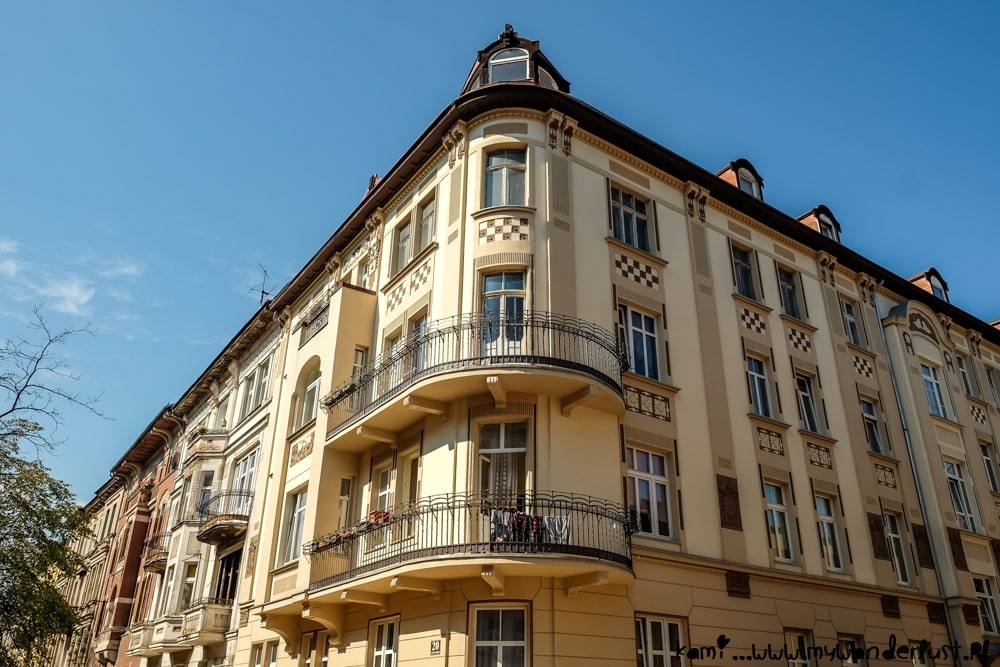
Most of the tourists visiting Jelenia Gora focus only on the pedestrian streets and Market Square but I recommend you wandering a bit more around the center as you can find some really beautiful art-nouveau townhouses and buildings. I especially loved the local theater building from the beginning of the 20th century – it could easily be shown in the architecture coursebooks, it’s so pretty.


A short walk from the center (a bit over a kilometer from the main square) you can reach the Bolesław III Wrymouth hill, named after the Polish duke who is believed to have established the town. According to the legend on this very hill, the first settlement (that eventually turned into Jelenia Gora) was built.
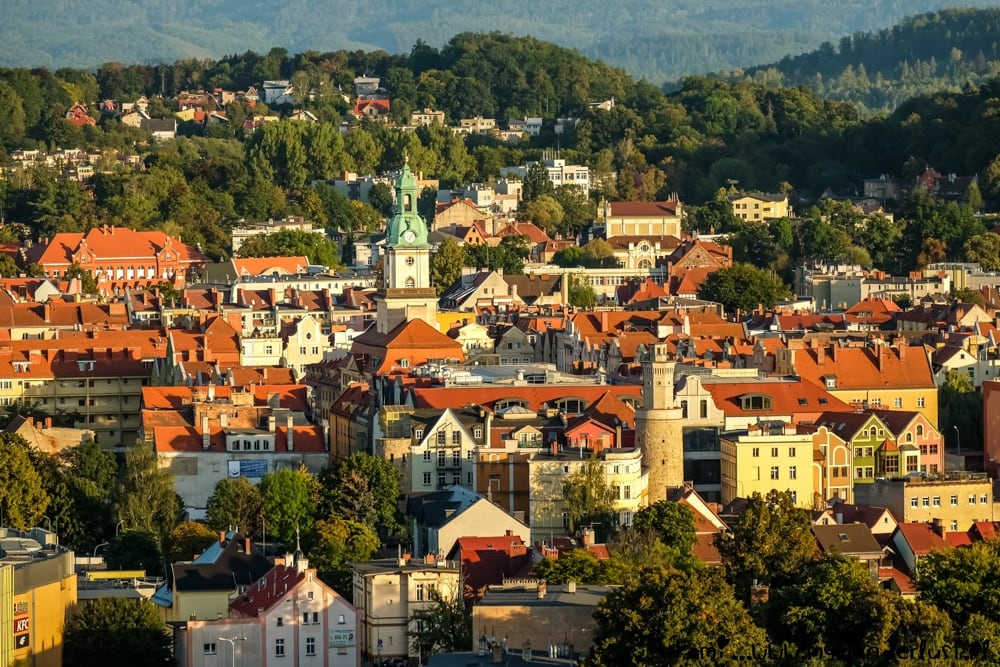
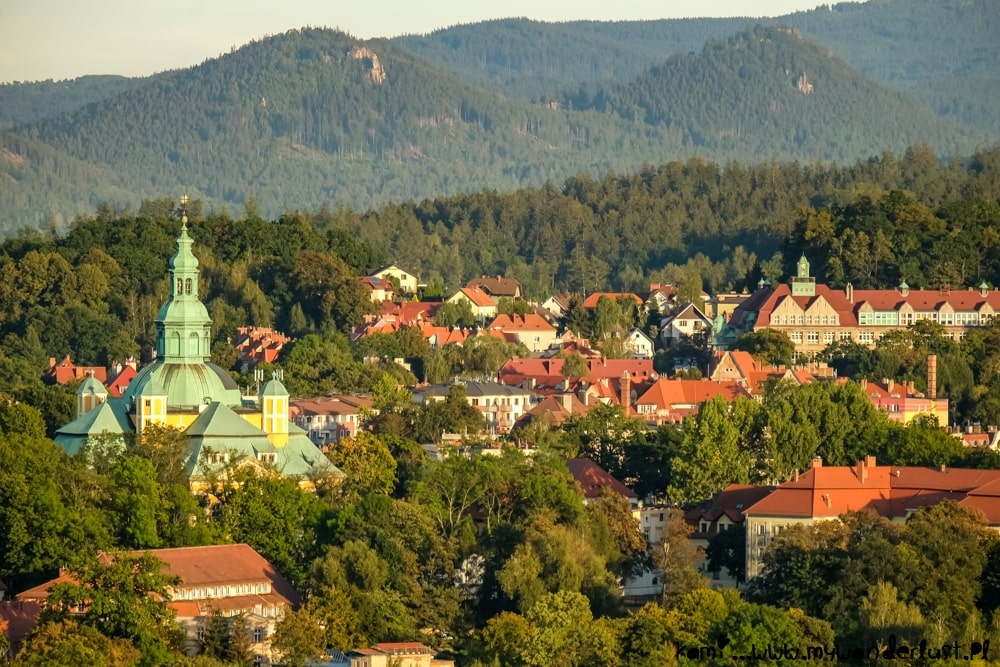
In 1911 the view tower was created on the hill – from the top, you can see a beautiful panorama of the city and surrounding mountains. It’s really worth doing this small detour from the center as the view, especially on the clear day, is really nice. I actually liked the place so much I visited it twice.


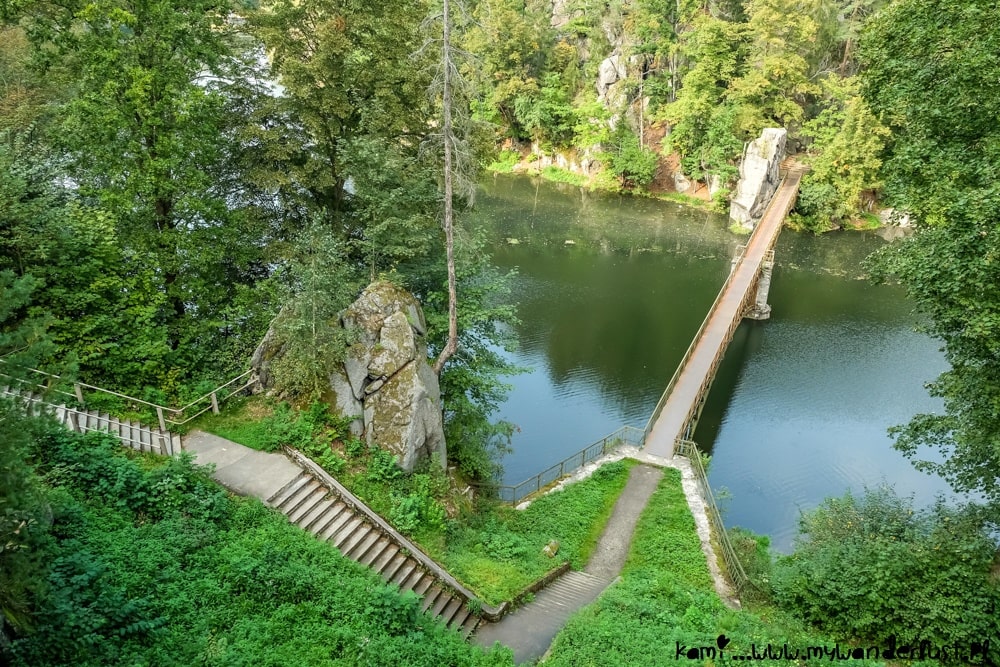
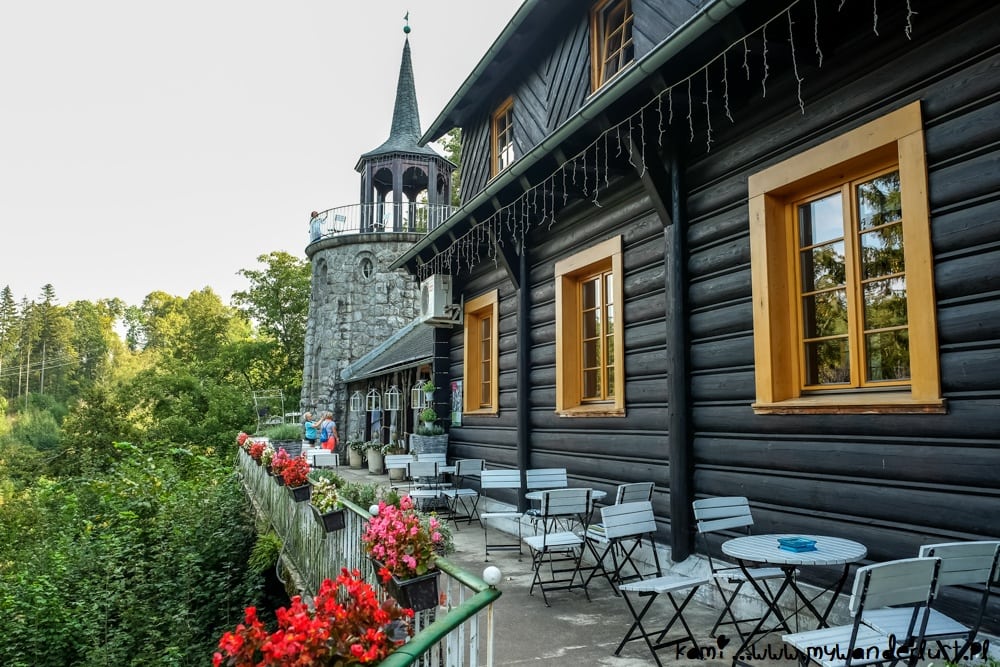
And while you are there and you feel like walking a bit more I recommend taking a trail to Perla Zachodu (“the pearl of the west”) – an old hotel, built before WW2, that is picturesquely located in the middle of the forest, above the Bóbr river.
To get there from Jelenia Gora you need to follow the walking trail that starts near Bolesław III Wrymouth Hill and goes pleasantly through the forest along the river. It’s a bit over a 3 km walk but the area is so nice and relaxing that going through the forest is a real pleasure.
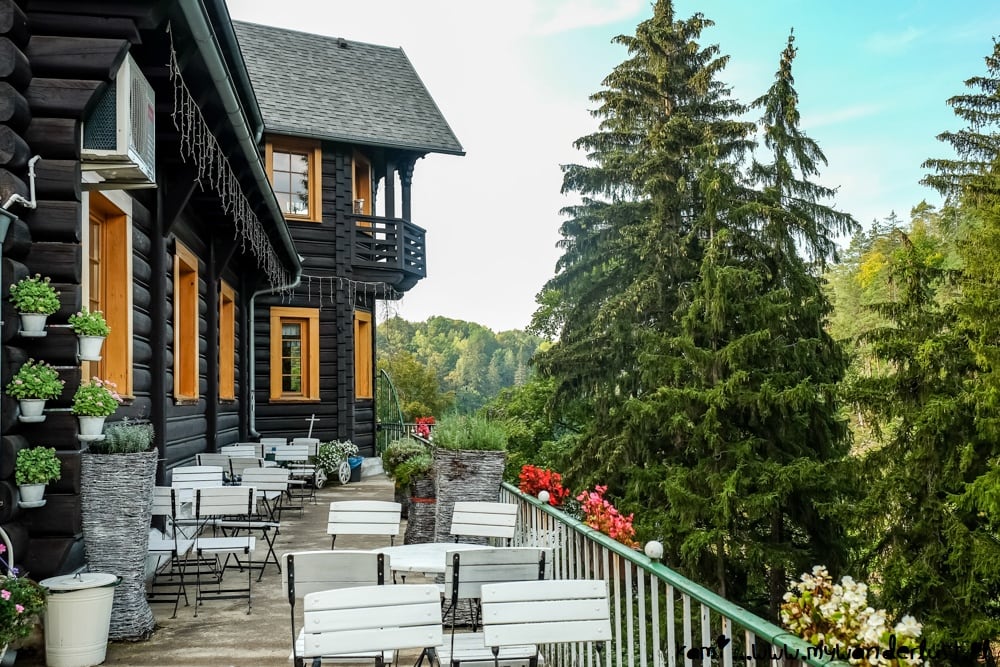
Once you reach Perla Zachodu you can sit down on the terrace there, grab some food and enjoy this magical place – it really looks like it’s taken straight from the fairy tale.




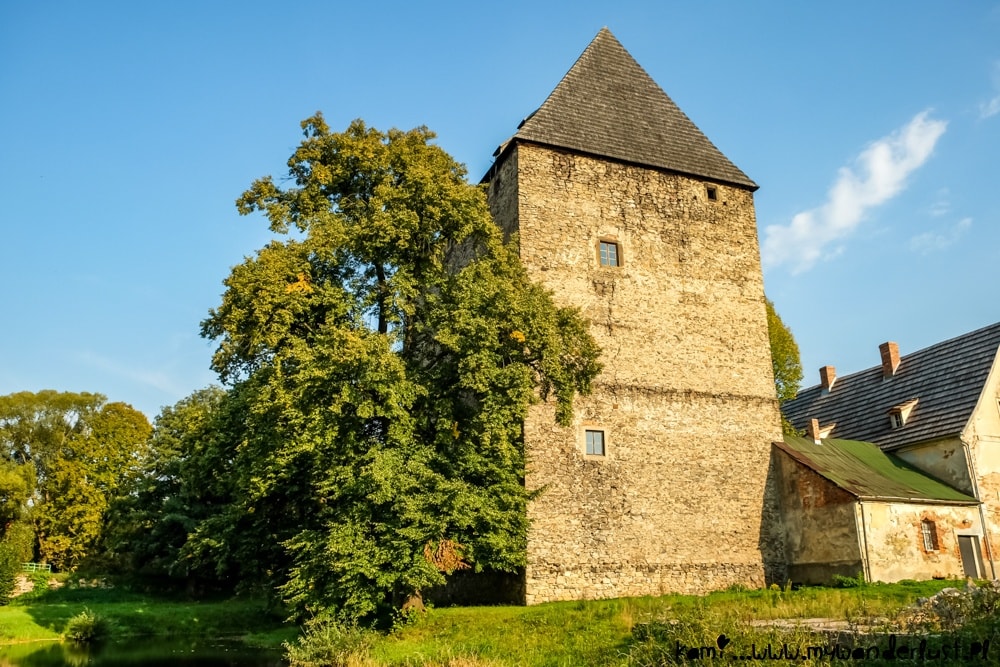
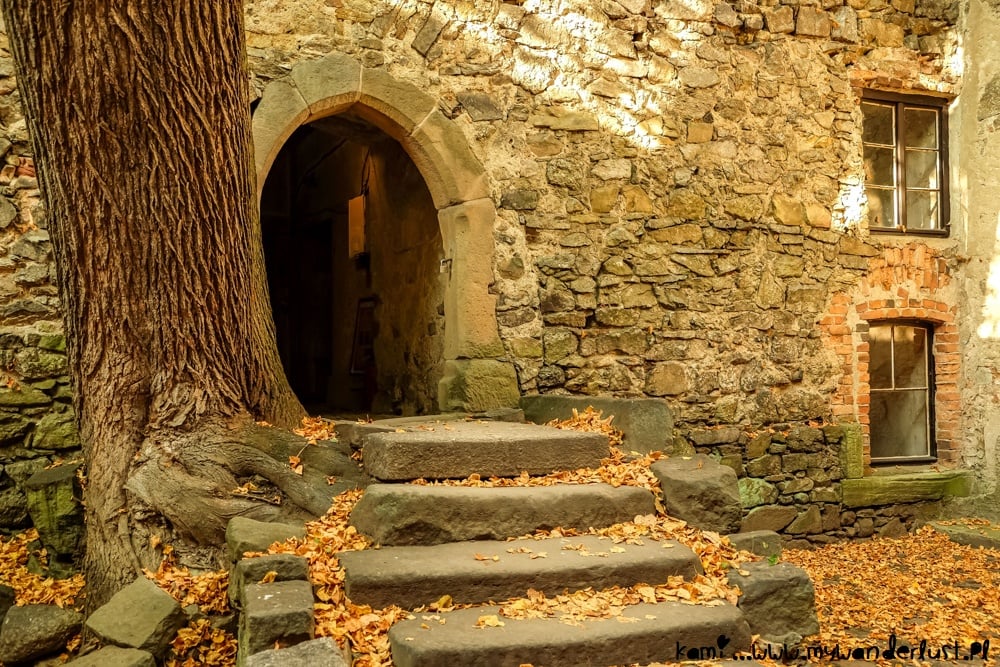
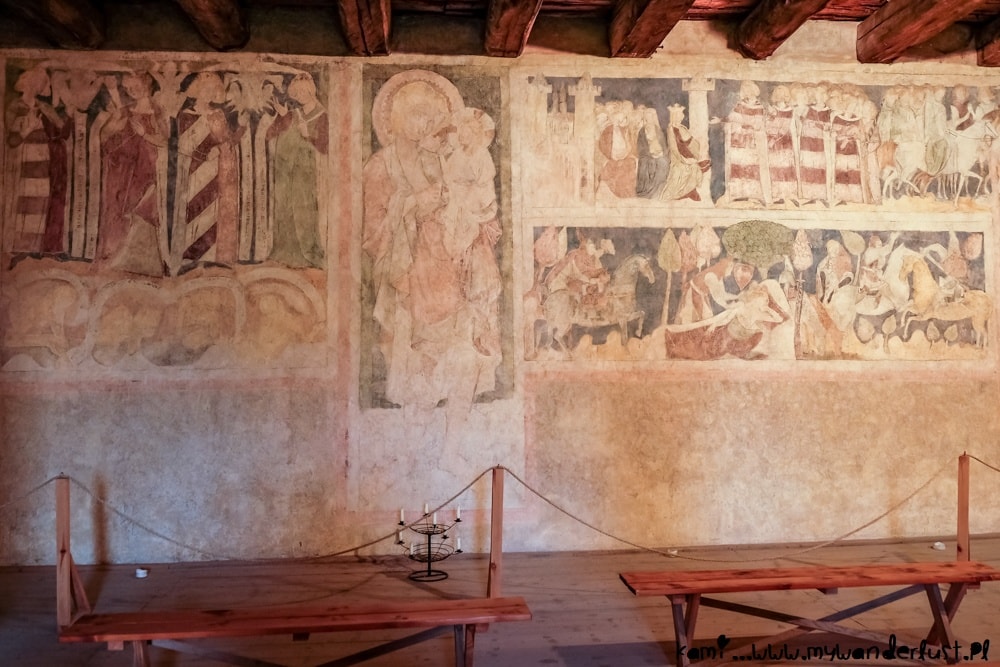
A bit over 1 km further you will reach Siedlecin village where you can visit the 14th-century living tower with unique medieval frescoes showing the legend about Lancelot. From Siedlecin you can also take the local bus back to Jelenia Gora or you can take the trail back to the city.

And if you would like to relax after all the sightseeing head to Cieplice Slaskie Zdroj, part of the city that is actually the oldest spa town in Poland. The recreational area is rather small but very pleasant.
The heart of Cieplice is the pedestrian street with the beautiful 18th-century Schaffgotsch’s Palace. You can sit down in one of the cafes (I recommend Harper) or on the bench and observe the life around you. You can also head to the lovely park and relax there, with the Karkonosze mountains in sight. And of course, you can take the advantage of all the spa facilities that are available in Cieplice.


Day trips from Jelenia Gora
The main reason why I stayed almost a week in Jelenia Gora was to see the area around the city too. I extended my time there so I had time for more great places yet I still haven’t seen everything that I wanted to, there are just too many interesting places in that part of Poland.
Here are the places I visited near Jelenia Gora:
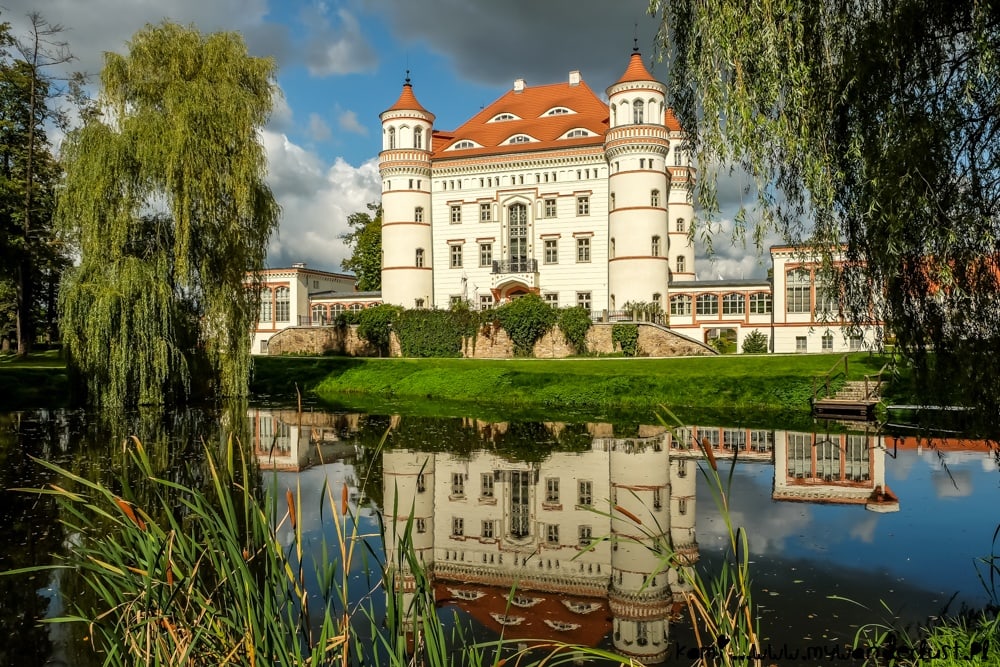
- So-called “valley of palaces” (known also as “Polish Loire Valley”) with around 30 castles, palaces, and mansions. My favorite ones are Karpniki Castle, Łomnica Palace, and Wojanów Palace. If you want to splurge a bit you can stay overnight in some of the palaces. I definitely recommend it! I stayed in Karpniki Castle once and it was pretty amazing.
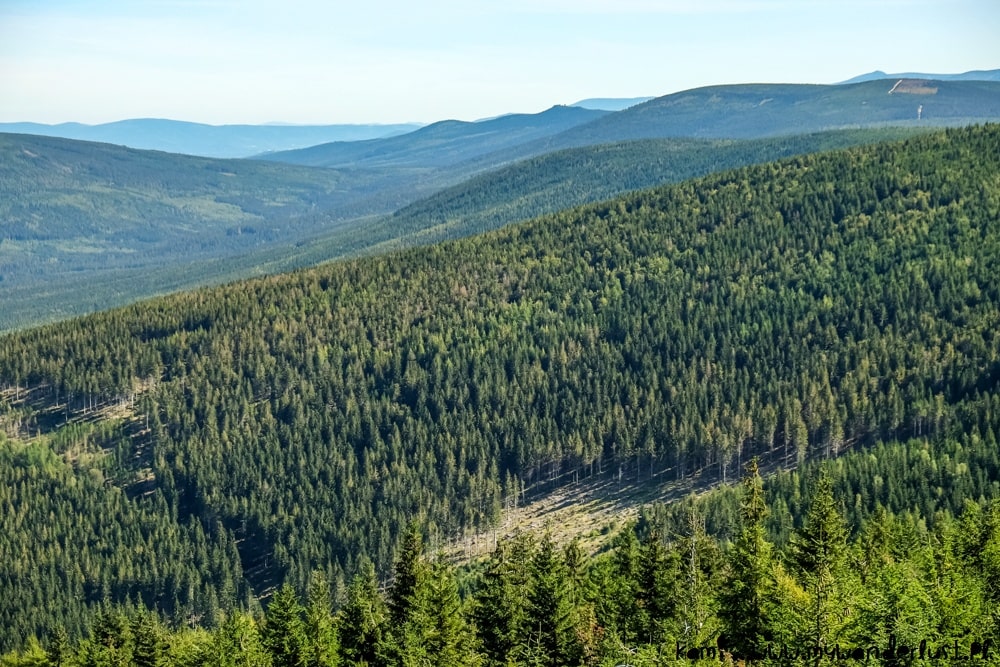
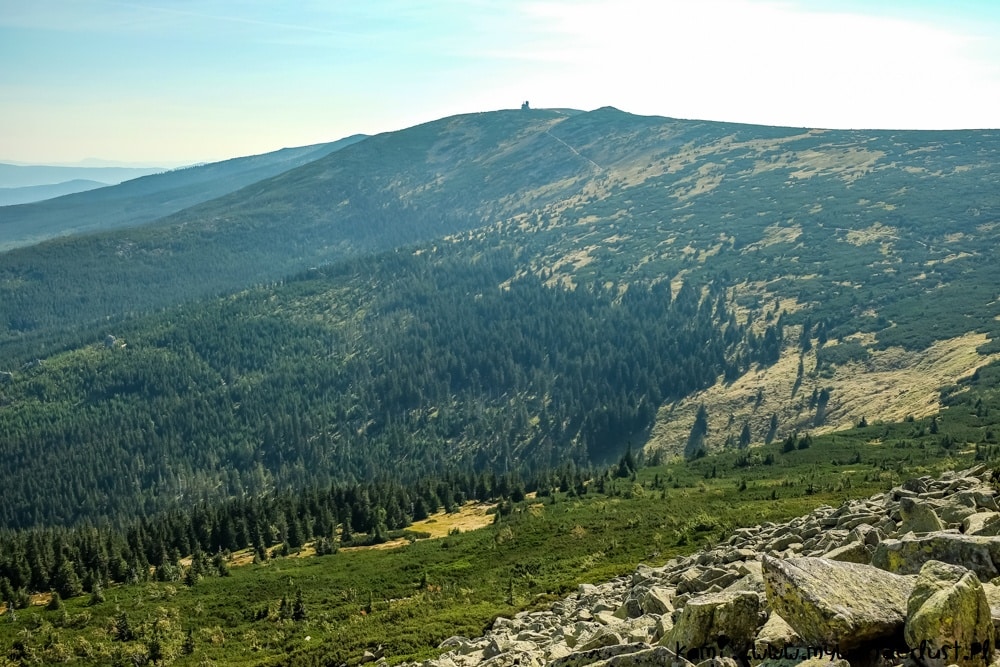
- Mountains! Jelenia Gora is surrounded by mountains so if you like hiking this is a perfect area to visit. Two of the very popular mountain resorts in Poland – Szklarska Poreba and Karpacz – are a short ride away from the city. If you would like to visit nearby mountains but don’t necessarily want to stay in the packed towns (like me), Jelenia Gora is the perfect base.
I easily went from the city to Szklarska Poreba and then up hiking to Sniezne Kotly in Karkonosze Mountains, and then back to Jelenia Gora. I walked in total some 25 km on that day and was away from Jelenia Gora for 12 hours. I relied on public transport only.Szklarska Poreba is only one option, the hiking choice there is much bigger!
- Karpacz – another starting point to go hiking in Karkonosze mountains but don’t miss the 13th century Vang Stave Church that was transferred there from Norway.
- Chelmsko Slaskie – a former town, now a village that I really wanted to visit to see old weavers’ houses from the 18th century. It was a bit crazy to get there by public transport and required some serious planning but the place was definitely worth the trip
- Krzeszow with the jaw-dropping Baroque abbey. Seriously, this place is just mind-blowing!
- Swieradow Zdroj – another spa town that I wanted to see really badly for its wooden spa house from the early 20th century. It didn’t disappoint! The town itself was really lovely too
- and many more! This area really is packed with attractions!





Final thoughts on visiting Jelenia Gora
If you are looking for an interesting yet still not very popular area to visit in Europe – Lower Silesia is a perfect choice. And while there, why not making Jelenia Gora your base.
I really enjoyed discovering the city and its surroundings and I know I will be back there this year again as there are still so many places I would like to see (and Lower Silesia is now on the very top of my Polish bucket list).


Further reading
I published many articles about Poland that you might find useful when planning your trip there. Here are some of them:
- 37 Amazing Things to Do in Krakow, Poland
- 20 Great Places to Visit As Day Trips from Warsaw, Poland
- Visiting Auschwitz – How to Plan the Auschwitz Tour
- 17 Amazing Things to Do in Lublin, Poland
- The Complete Guide to Visiting Slownski National Park, Poland
- Visit Grudziadz – One of the Hidden Gems of Poland
- 19 Amazing Things to Do in Gdansk, Poland
- Visit Sandomierz, Poland – One of the Prettiest Towns in the Country
- Visiting Malbork Castle, Poland – the Largest Castle in the World
- 25 Amazing Things to do in Wroclaw, Poland
- and many more!
If you are looking for articles about a specific destination – check out the map with all the articles I’ve published (and their locations). You can also join my Facebook group about traveling in Central Europe and ask your questions there.
Travel Resources
You can find the best accommodation options at Booking. They have many discounts and excellent customer service. Click here to look for the place to stay in Jelenia Gora
Never travel without travel insurance, you never know what might happen and better safe than sorry. You can check the insurance policy for Poland here.
I recommend joining organized tours to get to know the place better and to visit more places during your trip. You can find a great selection of tours at Get Your Guide – click here.
Make sure to have the offline map always installed on your phone, they can save you so many troubles. I always use the free app Maps.Me.
For the end I left a few announcements that might interest you:
- Sign up to my newsletter or follow me on Bloglovin to get updates about the new posts
- Join my Facebook group about Eastern Europe, the Balkans and former USSR and connect with fellow travellers and enthusiasts of these regions – just click here!
- I’ve included a few handy links of services and products I personally like and use so you can plan your own trip to Poland too. They are often affiliate links. This means I will get a small commission if you book/purchase anything through my links, at no extra costs for you. Thank you!
LIKED IT? PIN THIS POST FOR LATER!

If you enjoyed that post why don't you share it with your friends? That would mean so much to me! Also be sure to join 30.000+ fellow travelers and follow me on Facebook, Twitter, or Instagram for travel updates and even more pictures! If you don't want to miss new posts sign up to my newsletter or follow on Bloglovin!

Piękny blog, świetnie się czyta!
Dziękuję
Hi Ma’am Kami,
Greetings from India!
And I am short of words for admiration on your Jelenia Gora write-up. It was so wonderful with loads of perfect pictures that anyone can fall in love with the city.
I am a 69 years young from India. I lost my wife last year out of Covid. She was 68. We both traveled many countries in Europe – some countries we visited twice, USA, UK, Australia. Now after her demise, I may travel alone to check my ability to do so. And which I hope, I can – minus her!!
Why it reminds me to visit Poland – when I was a kid, back in 1965, my father had a friend with Polish spouse and their son’s name was Tarun (Polish city Torun) and later I met a Polish lady in Chicago who kindly shared a book on Poland – aah – so pretty landscapes.
Thank you once again Ma’am. I am much obliged to read your article.
Best regards
Atul Kumar Garg
Thank you for your kind words. I’m sorry for your loss but I hope you will still be able to explore the world. All the best!
Dear Kami, thanks to your amazing posts packed with useful information Lower Silesia and Wroclav became our most desirable destinations. We are coming back to this region for the second time this year and i believe – not the last.
Thank you! I definitely share your interest in Lower Silesia, this is such a fascinating region. What places are you planning to visit during your next trip? Have a wonderful time there!
I just stumbled on this article as I am making my way to Jelenia Gora in two days. I chose it rather spontaneously, hoping for a rest in a smaller town with access to nature. Can you access the paths and the castle by bus or train? You appear to do a lot of waking! Is it possible to see most of what you have written about here on foot? Thanks so much for such a beautiful blue print.
I did everything by public transport or walking so it’s definitely possible :) Enjoy your trip to Jelenia Góra!
Hi Kami,
I appreciate your detailed write-up. I would like to ask though, if you have also been to Legnica? Basically I am heading to Warsaw next week from Germany and am making a little road trip to get there and I am conflicted between Jelenia Gora and Legnica. I would only be there for a day, so not so much time to explore the outer city. My interests for a day would mostly be pubs and good food (but also architecture and enjoying the old city of course).
Cheers,
Brett
Hi Brett. I’m sorry for my late answer, I hope I’m not too late with it. Legnica has been on my bucket list for years but I haven’t made it there yet so I can’t really say which city is better. But no matter which one you choose, I’m sure you will enjoy it as Lower Silesia is pretty amazing. Have a great trip!